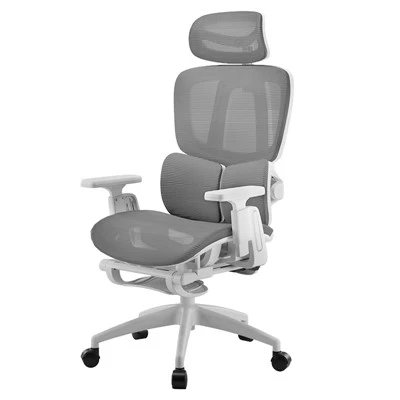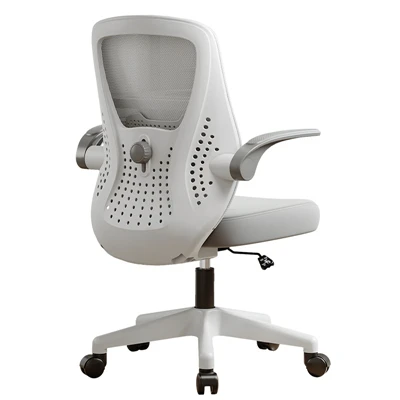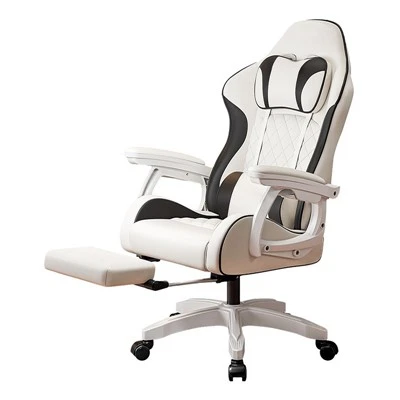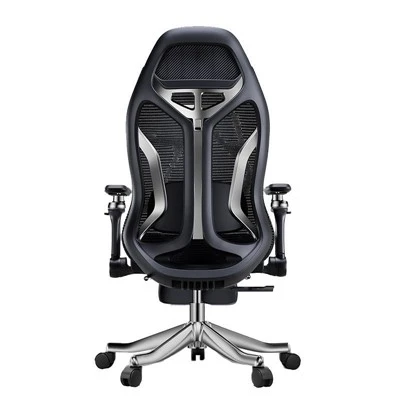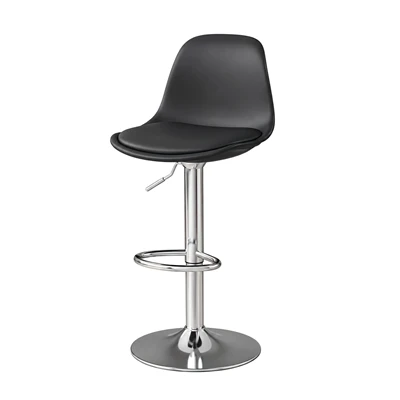

The basic operating principle of an office chair involves adjusting the seat height via a pneumatic lift mechanism located at the base. A gas lift cylinder is installed beneath the seat; it utilizes sealed gas and a piston structure to generate supporting force. When the user operates the height adjustment lever, a valve inside the cylinder opens or closes; the interaction between the user's body weight and the cylinder's internal pressure causes the seat to move up or down. During upward adjustment, the cylinder provides upward thrust; during downward adjustment, the user's weight pushes the seat down. Upon releasing the lever, the internal valve closes, locking the cylinder in place and securing the seat at the desired height. This mechanism allows the chair to accommodate users of varying heights and align with desks of different elevations, ensuring optimal positioning for the arms, line of sight, and work surface.
The backrest's tilt function relies on components within the chair's base mechanism, including springs, pivot points, locking mechanisms, and adjustment controls. During standard work, the backrest remains relatively upright to support the back; when the user leans back, the pressure exerted by their body transfers through the backrest to the base, causing the backrest to tilt backward around the pivot point. Some chairs allow the backrest angle to be locked, while others enable it to tilt freely within a specific range. Springs within the base provide the restoring force that returns the backrest to its original position; a tension adjustment knob allows users to modify the tilt resistance, ensuring appropriate support for individuals of different body weights. High-end ergonomic chairs may feature a sophisticated synchronous tilt mechanism, where the seat and backrest move simultaneously at a set ratio, maintaining stable body support while reclining.
The chair's overall load-bearing capacity and mobility are achieved through the combined function of components such as the seat, base mechanism, gas lift cylinder, five-star base, and casters. Body weight is first applied to the seat, transferred through internal structural supports to the base mechanism, passed down the gas lift cylinder to the five-star base, and finally distributed to the floor across multiple contact points. The five-star base typically consists of five supporting arms, which widen the chair's footprint and enhance stability during use. Casters mounted at the ends of the five-star base enable the office chair to move across the floor while reducing the effort required for movement. Some chairs also feature adjustable armrests, seat depth, and lumbar support, utilizing mechanisms such as rails, knobs, springs, or other mechanical systems. Overall, the chair does not rely on a single component to perform its functions; instead, it integrates features like pneumatic height adjustment, chassis controls, mechanical rotation, and multi-point support to facilitate lifting, tilting, mobility, and posture adjustments, thereby meeting the diverse needs of the daily work environment.